Dangote Cement’s sustainability journey was institutionalised in 2017 with the adoption of the 7 Sustainability Pillars – institutional, social, economic, financial, environmental, operational, and cultural sustainability. The ethos behind our very organic sustainability culture is one that is rooted in the understanding of all levels of employees and yet driven from the highest level of leadership. The 2017 mandate from the Board and Management was to “operationalise sustainability”, and this is what we continuously strive to do. With the adoption of all seven pillars, every aspect of our business operations is touched and involved in the agenda to build a sustainable and global brand.
For the Dangote Group, Sustainability Thinking enables us better balance our economic, social and environmental priorities while sustaining our financial, operational and institutional goals, safeguarding the well-being of present and future generations and maintaining a holistic respect for ethical values and local cultures.
Our 7 Sustainability pillars support our unique approach to
creating a world-class enterprise.
Driven by the goal of achieving the highest level of governance,
the 7 Sustainability Pillars are embedded in our corporate
culture and guide our approach to building a prosperous and
sustainable business.
“Our commitment is further demonstrated in the enthusiasm with which we continue to operationalise our 7 Dangote Sustainability Pillars, which collectively reflect the ethos behind The Dangote Way.”
Our approach is built on the premise that sustainability must be owned and practiced at
every level of our organization, especially at the highest levels of institutional governance.
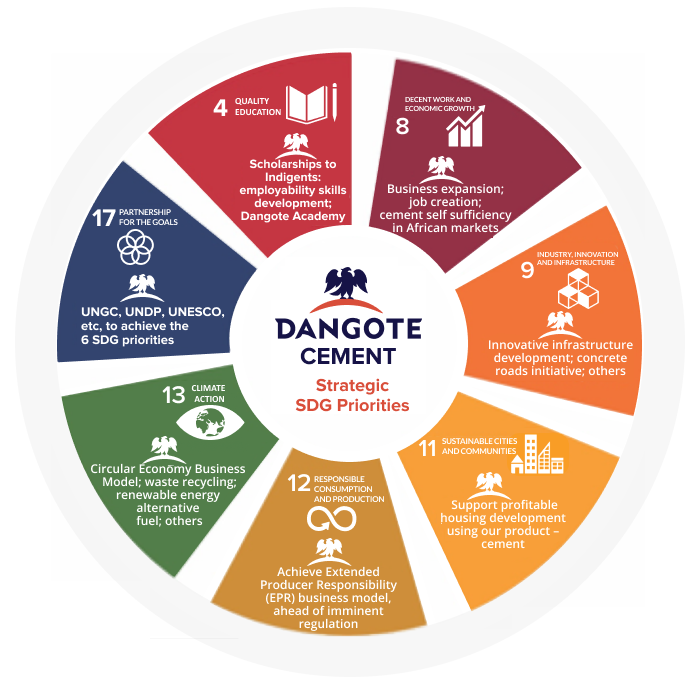
At Dangote Cement, the SDGs have been directly linked with our Seven (7) Sustainability Pillars as well as the triple bottom-line (People, Planet, Profit). The SDG targets help to focus our environmental, social and economic impact drive as a responsible business. The Goals also create a common platform for dialogue and engagement with all key stakeholders.
However, as 2030 draws closer, and with the increasing pressure from COVID-19 pandemic which has destabilised socioeconomic wellbeing across the world, including Africa which is our niche market; we identified a strong need to review our SDG implementation strategy. Following this review, we focused on aspects of the 17 SDGs that directly and clearly align with our line of business, product line and corporate objectives while we remain committed to all 17 SDGs as a business. The diagrams below show our niche SDGs and some of our sustainability initiatives that align with them.